Chiaia Station
Metro Line 6
Uberto Siola | 2024
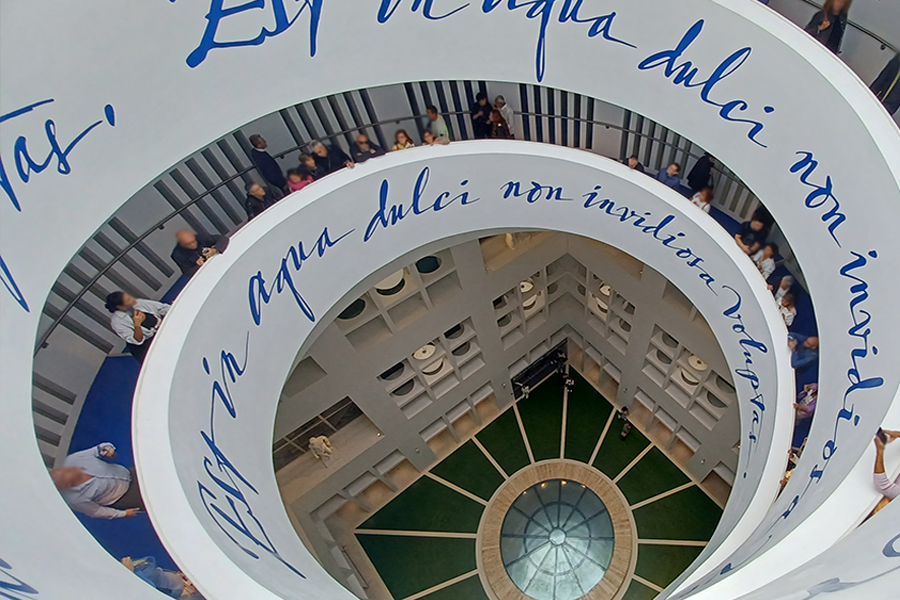
For the Chiaia station, Uberto Siola’s design envisioned the construction of a monumental multi-story underground building, serving not only as access to the metro platforms but also as a vertical connection between two different levels of the city: the main entrance on Piazza Santa Maria degli Angeli and the secondary access on Via Chiaia.
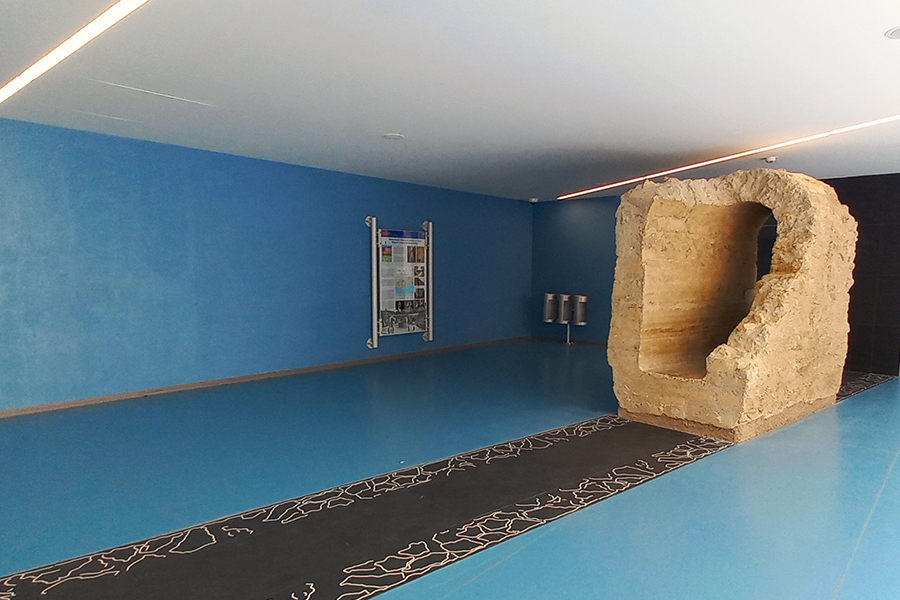
The excavation of this imposing "well," measuring approximately 30 x 40 meters, uncovered not only a sequence of ancient soil layers with traces dating back to the Late Neolithic (mid-5th to mid-4th millennium BCE), but also the valuable remains of a section of the Augustan aqueduct, now visible on the station’s first level.
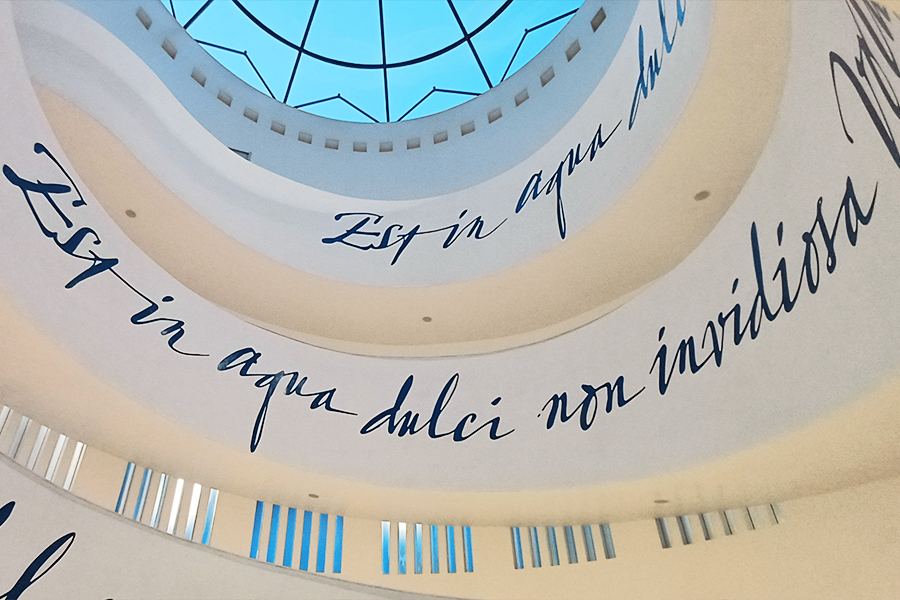
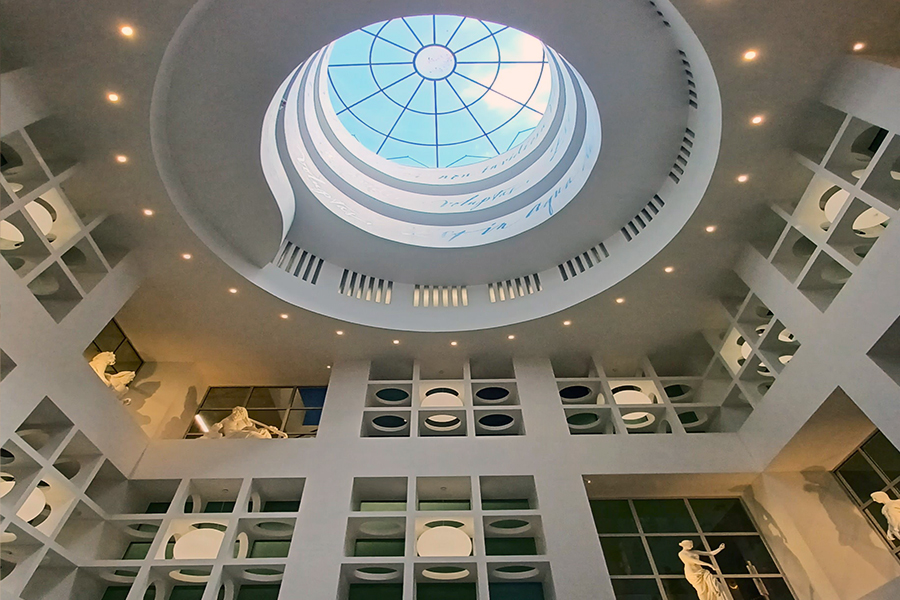
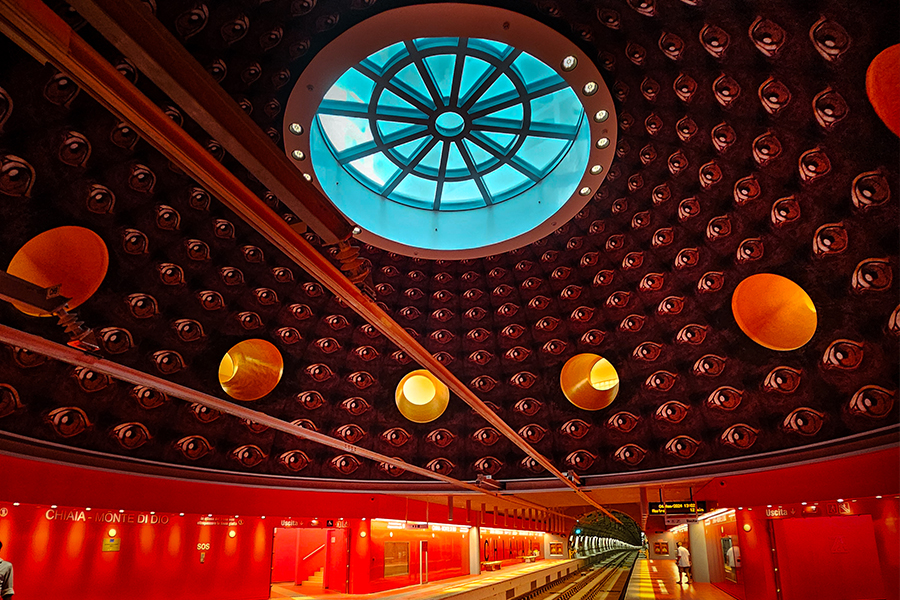
The building consists of a succession of overlapping volumes—a cylinder, a cube, an octagonal prism, and a hemispherical dome—all connected by the central idea of "transporting natural light" from the highest level at Piazza Santa Maria degli Angeli, where a large glass dome with a lowered arch allows daylight to enter, down to the tunnel level. The descent into the station thus becomes an experience of shifting perceptions of natural light. As sunlight filters through transparent domes at various levels, it transitions from the dazzling intensity of the upper piazza, gradually softening, until it reaches the final evocative "eye of light" at the center of the dome covering the lower plaza at the train level—almost reminiscent of an underground Pantheon.
"Bringing light from above to the heart of the city, in a play of spaces that unites all the layers of Naples" is how architect Siola describes his project (Napoli Linea 6, parla il progettista Siola: «Stazione Chiaia, un viaggio verso l’Ade», Il Mattino, July 15, 2024). He also highlights how the circular ramp leading from Monte di Dio to Via Chiaia echoes the bastion of the Helical Ramp in Urbino, designed between 1480 and 1488 by Francesco di Giorgio Martini specifically to connect two different urban levels.
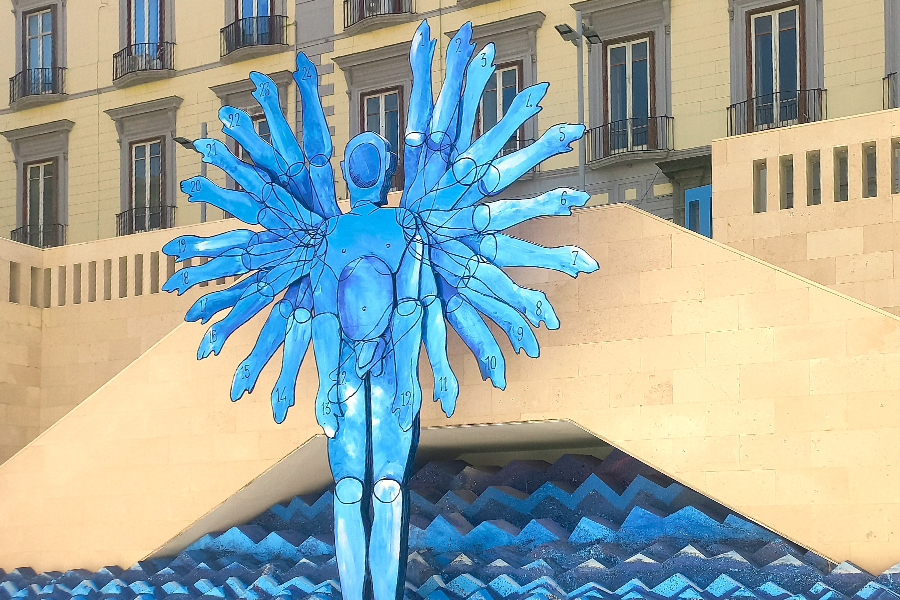
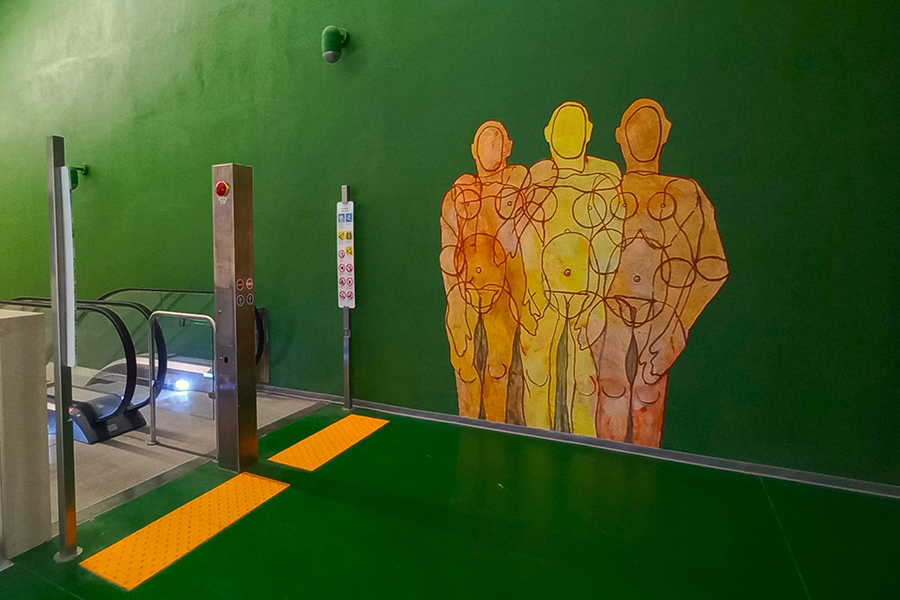
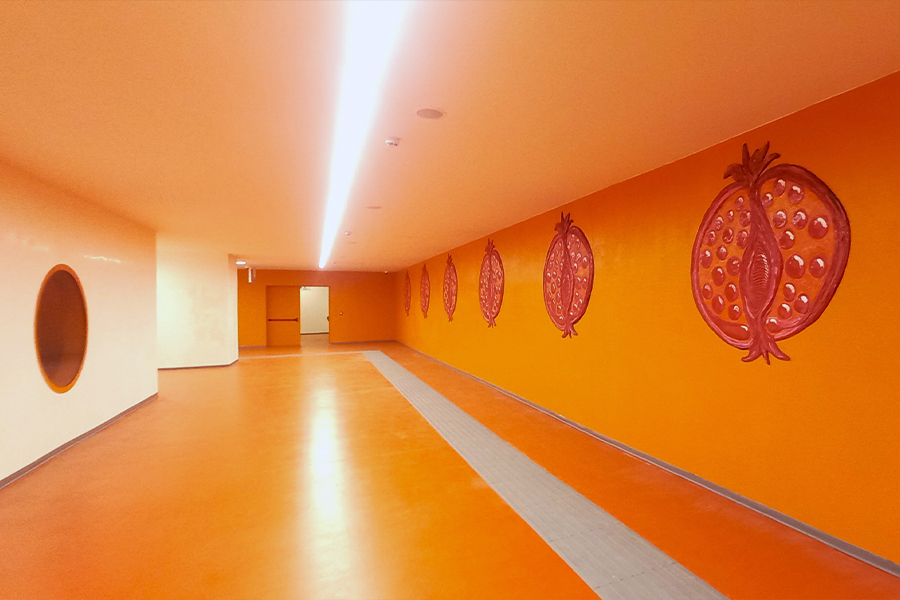
Closely integrated with Siola’s architectural project is the multidisciplinary artistic intervention by Peter Greenaway, conceived as a unified artwork composed of a complex sequence of two- and three-dimensional artistic elements. Greenaway’s spectacular intervention follows a narrative and conceptual thread inspired by a mythological journey "from the Skies of Olympus to the mysterious depths of the Underworld," evoking the ancient Greco-Roman cultural heritage deeply embedded in the city's memory.
While the sequence of central volumes—the "heart" of the architecture, traversed by light—maintains a continuous white aesthetic, the surrounding walls transition through different color palettes as one moves from level to level. "Each station level is thus associated with a deity, and each deity is linked to a color, with all its psychological and metaphorical implications. The interplay of reflections between the ever-present natural light and the succession of colors, inspired by the mural paintings of Pompeii and Herculaneum, becomes a striking testament to the ongoing creative dialogue between architect and artist. The sky of Jupiter is white and blue, the sea of Neptune is cobalt blue, the earth of Ceres is emerald green, the pomegranate of Proserpina is yellow-orange, and crimson red dominates the Underworld of Pluto."